Posts

PI - A MATHEMATICAL CONSTANT

Image
Definition of Pi: Pi is defined as the ratio of circles circumference ( C ) to the its diameter ( d ), i.e., π = C/d The ratio  π = C/d is constant for any size of circle. The symbol used to represent pi is the Greek letter π. π is irrational number. π is also transcendental, i.e. it is not the root of any non-zero polynomial. 22/7 is commonly used as an approximate value of π. π is also used in Euler's identity  e π i + 1 = 0
AMICABLE NUMBERS

Image
Two different numbers are such that the sum of proper divisors of each is equal to the other number.  Proper divisors of a given number are the numbers ( except the number itself ) that can divide the given  number Example: Proper divisors of 8 are 1, 2, 4.  The smallest pair of the amicable number is ( 220, 284 ) Proper divisors of 220 are 1, 2, 4, 5, 10, 11, 20, 22, 44, 55, 110 and the sum of the divisors are 1 + 2 + 4 + 5 + 10 + 11 + 20 + 22 +  44 + 55 + 110 = 284 . Proper divisors of 284 are 1, 2, 4, 71, 142 and the sum of the divisors are 1 + 2 + 4 + 71 + 142 = 220. Other examples include ( 1184, 1210 ), ( 2620, 2924 ), ( 5020, 5564 ), ( 6232, 6368 ), ( 10744, 10856 ), ( 12285, 14595 ) etc.

PASCAL'S TRIANGLE

Image
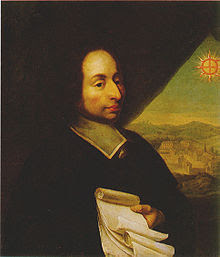
Pascal's triangle ( An extraordinary logical structure ) Pascal's triangle is one of the most interesting structure in mathematics, named after the French mathematician, inventor, physicist Blaise Pascal ( 1623 - 1662 ). The structure looks like a triangle with 1 at the top vertex and running down the two slanting sides. This array of numbers is known as Pascal's triangle. Also known as Meru Prastara, Tartaglia's triangle ( after Nicolo Tartaglia ). Many other mathematicians studied the Pascal's triangle centuries before him in China, India, Germany, Italy and Persia. Features of Pascal's triangle Expansion for the higher powers of binomial are possible by using Pascal's triangle. Example: The row for the index 5 in binomial expansion is 1   5   10   10   5   1 The sum of the numbers in each row is the power of 2. The numbers in each row is the power of eleven. Example: The first row is 11 to the power 0, 2nd row the number...

TOPOLOGY

Image
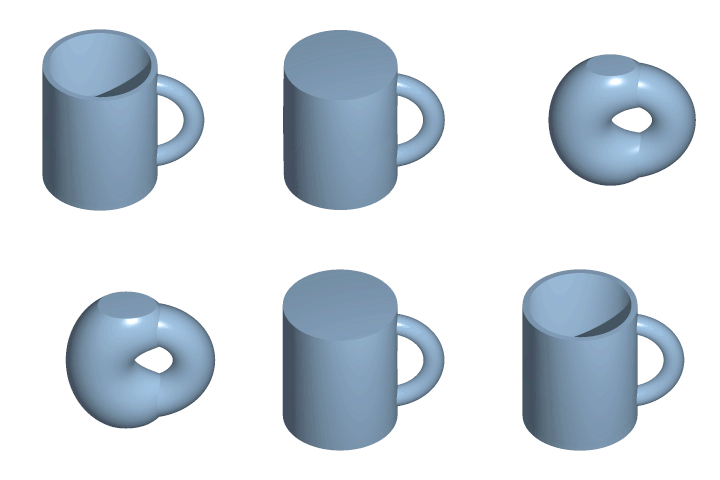
Topology ( Branch of mathematics ) Topology, branch of mathematics , sometime reffered to as "rubber sheet geometry" in which two ibjects are considered equivalent if they can be continuously deformed into one another through such motions in space as bending, twisting, stretching and shrinking while disallowing tearing apart or gluing together parts. The main topics of interest in topology are the properties that remain unchanged by such continuous deformations. Topology while similar to geometry differs from geometry in that geometrically equivalent objects often share numerically measured quantities, such as lengths, angles, while topologically equivalent objects resemble each other in a more qualitative sense. The area of topology dealing with abstract objects is referred to as general, or point set topology. General topology overlaps with another important area of topology called algebraic topology. These areas of specialization form the two major subdisciplines...

KLEIN BOTTLE

Image
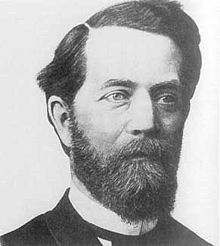
Klein bottle was first described by german mathematician Felix Klein in 1882. Klein bottle is obtained by identifying two ends of a cylindrical surface in the direction opposite that is necessary to obtain a torus. The surface is not constructible in three-dimensional Euclidean space  but has interesting properties, such as being one-sided like the mobius strip, being closed yet having no "inside" like a torus or a sphere and resulting in mobius strips if properly cut in two.

MOBIUS STRIP

Image
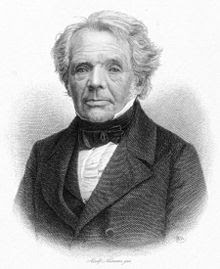
Mobius strip ( Amazing Geometry )  Mobius strip is a one sided surface that can be constructed by affixing the ends of a rectangular strip after having gived one of the ends a one half twist. The space exhibits interesting properties, such as having only one side and remaining in one piece when split down the middle.  The properties of the strip were discovered independently and almost simultaneously by two German mathematicians,  August Ferdinand Mobius  and  Johann Benedict Listing , in 1858. If you cut a mobius strip through the centre line, you will have one long strip with two full twist , rather than two seperate strips.

KONIGSBERG BRIDGE PROBLEM

Image
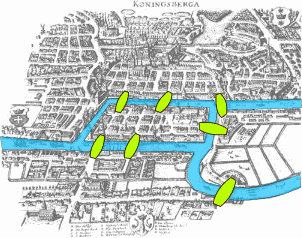
Konigdberg bridge problem ( Real life mathematical problem ) Konigsberg is a town on the Pregel River , which in the 18th century was a German town, but now is Russia.  The problem led to the development of the branches of mathematics known as Topology and Graph Theory . The problem of bridge is as follows: Within the town are two river islands that are connected to the banks with seven bridges as shown. People tried to walk around the town in a way that only crossed each bridge once,but it proved to be difficult problem.   Leonhard Euler, a Swiss mathematician in the service of the Russian empire Catherine the Great, heard about the problem. In 1736 Euler proved that the walk was not possible to do. He proved this by inventing a kind of diagram called a network, that is made up of vertices  ( dots where lines meet ) and arcs ( lines ) . He used four dots ( vertices ) for the two river banks and the two islands.These have been marked A, B and C, D. Th...