Posts

EULER TRAIL PUZZLE

Image
What is an Euler trail ? An Euler trail ( Euler path ) is a trail in a finite graph which visits every edge exactly once. An Euler trail is a walk on the edges of a graph which uses each edge exactly once. Euler trail is also called an Euler chain , Euler walk , Euler path . Here is the puzzle as you could see in the picture. Your job is to cross each line exactly once without lifting your pen.  In the following figure consider every marked line as a single line and each must be crossed once without lifting you pen. Here are some examples already done, but in each case, one line is left ( marked red ) to be crossed . See the figures. Have you got the solution ? well, this is impossible to do however hard you try.  Explanation Consider the figure below and find the numbers of line reaching the centre of each box. In the figure you could see that there are three centre points with odd number o...

SQUARE PUZZLE - CUTTING A THREE-FOURTH OF A SQUARE INTO FOUR EQUAL PARTS

Image
Square puzzle How can you cut a 3/4th of a square into 4 equal pieces ? Suppose you have a square as shown in figure And you have cut out a quarter of the square.  Now again you want to cut the remaining bigger piece ( red piece ) into 4 equal parts, how could  this  be done ? This is not as hard as you are thinking. See the figure and discover some more puzzles like this.

GOLDEN RATIO IN MATHEMATICS

Image
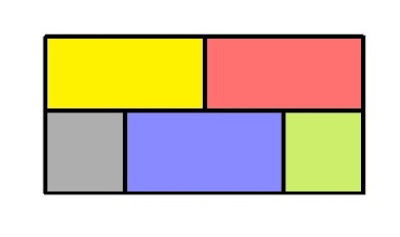
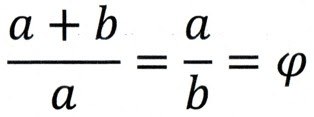
What is golden ratio ? In mathematics, two quantities are in the golden ratio, if their ratio is same as the ratio of their sum to the larger of the two quantities . Let a and b be two quantities such that a > b > 0, then algebraically it is written as follows, Golden ratio is denoted by Greek letter phi given below: The value of golden ratio is, Golden ratio is a very important concept in mathematics which is used in designing geometrical shapes , in the construction of architectural structures etc. Golden ratio is an irrational number. Other names of golden ratio are golden number, golden section, golden mean, golden proportion, golden cut, divine section, extreme and mean ratio etc. Golden ratio is related to the fibonacci series . If you take any two successive ( one after the other ) fibonacci numbers, their ratio is very close to the golden ratio . Calculation of the golden ratio From the definition of golden ratio, w...

VECTOR ALGEBRA

Image
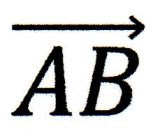
Oxford dictionary definition: A quantity having direction as well as magnitude, especially as determining the position of one point in space relative to another. Cambridge dictionary definition: Something physical such as force that has size and direction. A vector is a quantity having both magnitude and direction , such as displacement, velocity, force, acceleration etc. What is magnitude ? Magnitude: Magnitude means the size of a mathematical object, e.g. when you say a force of 5N is applied in the west direction, it means the magnitude of force is 5 and the direction of force is west. A directed line segment is a vector denoted by arrow over AB ( see figure ) and read as 'vector AB' The arrow indicates the direction of vector . The point A from where the vector AB  starts is called its initial point and the point B where it ends is called its terminal point .  The distance between initial and terminal points of a vector is called th...

MATHEMATICAL MODELLING

Image
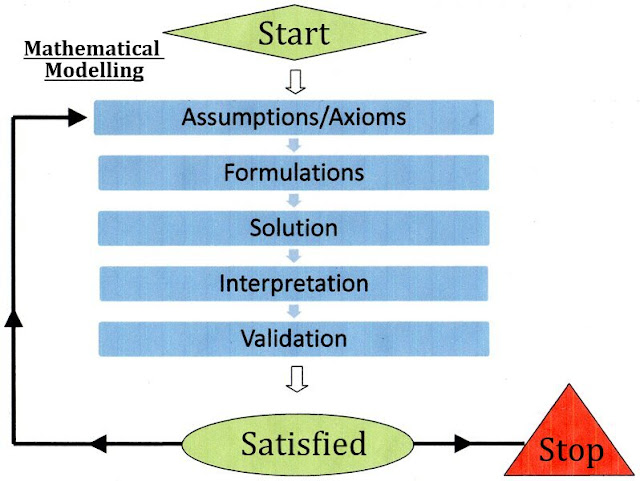
What is mathematical modelling ? Mathematical modelling is an attempt to study some part ( or form ) of the real-life problems in mathematical terms. Conversion of physical situation into mathematics with some suitable conditions is known as mathematical modelling.  Mathematical modelling is nothing but a technique and the pedagogy taken from fine arts and not from the basic sciences. The use of mathematics in solving real-world problems has become widespread especially due to the increasing computational power of digital computers and computing methods, both of which have facilitated the handling of lengthy and complicated problems .  The process of translation of real-life problem into mathematical form can give a better representation and solution of certain problems . Example Suppose a surveyor wants to measure the height of a tower . It is physically very difficult to measure the height using measuring tape . So, the other option is to find o...

THEODOLITES AND THE APPLICATIONS OF TRIGONOMETRY

Image
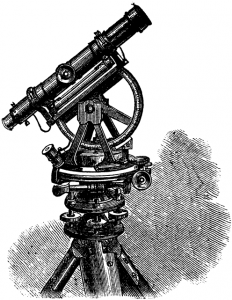
A theodolite ( Application of trigonometry) A theodolite is a instrument used for measuring angles in vertical and horizontal planes. A theodolite is used for the applications of trigonometry such as surveying, navigation, measuring distances etc. A theodolite consist of movable telescope mounted on two perpendicular axes. Surveyors have used trigonometry for centuries. One such large surveying project of the nineteenth century was the 'Great Trigonometry Survey' of British India for which the two largest-ever theodolites were built . During the survey in 1852, the highest mountain in the world was discovered. From a distance of over 160 km , the peak was observed from six different stations. In 1856, this peak was named after Sir George Everest, who had commissioned and first used the giant theodolites . The theodolites are now on display in the Museum of the survey of India in Dehradun .

HEIGHTS AND DISTANCES AND THE APPLICATIONS OF TRIGONOMETRY

Image
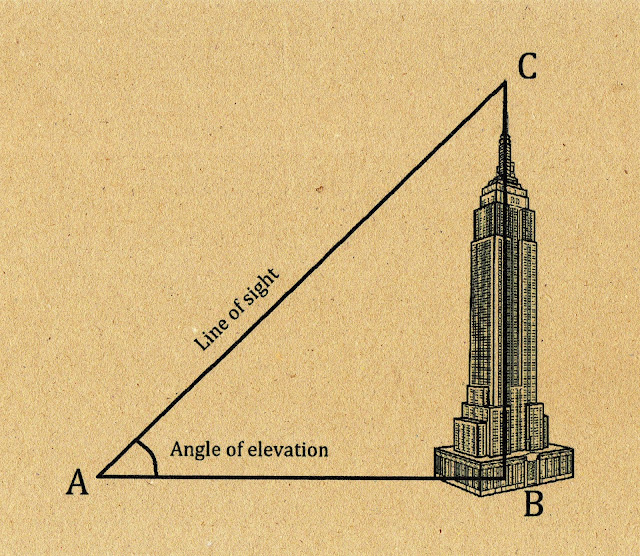
Measuring heights and distances using trigonometry. Trigonometry is also used for finding the heights and distances of various objects, without actually measuring them. To find the distance or height of any object or building etc., you have to calculate the angle of elevation/depression and calculate the distance/height using trigonometric ratios. Some important expressions to keep in mind while solving the above problem of height and distance given below: Line of sight: It is the line drawn from the eye of an observer to the point in the object viewed by the observer. Angle of elevation: This is the angle formed by the line of sight with the horizontal when it is above the horizontal level, i.e., the case when we raise our head to look at the object. Angle of depression: The angle formed by the line of sight with the horizontal when it is below the horizontal level, i.e., the case when we lower our head to look at the object.  Trigonometric ...